


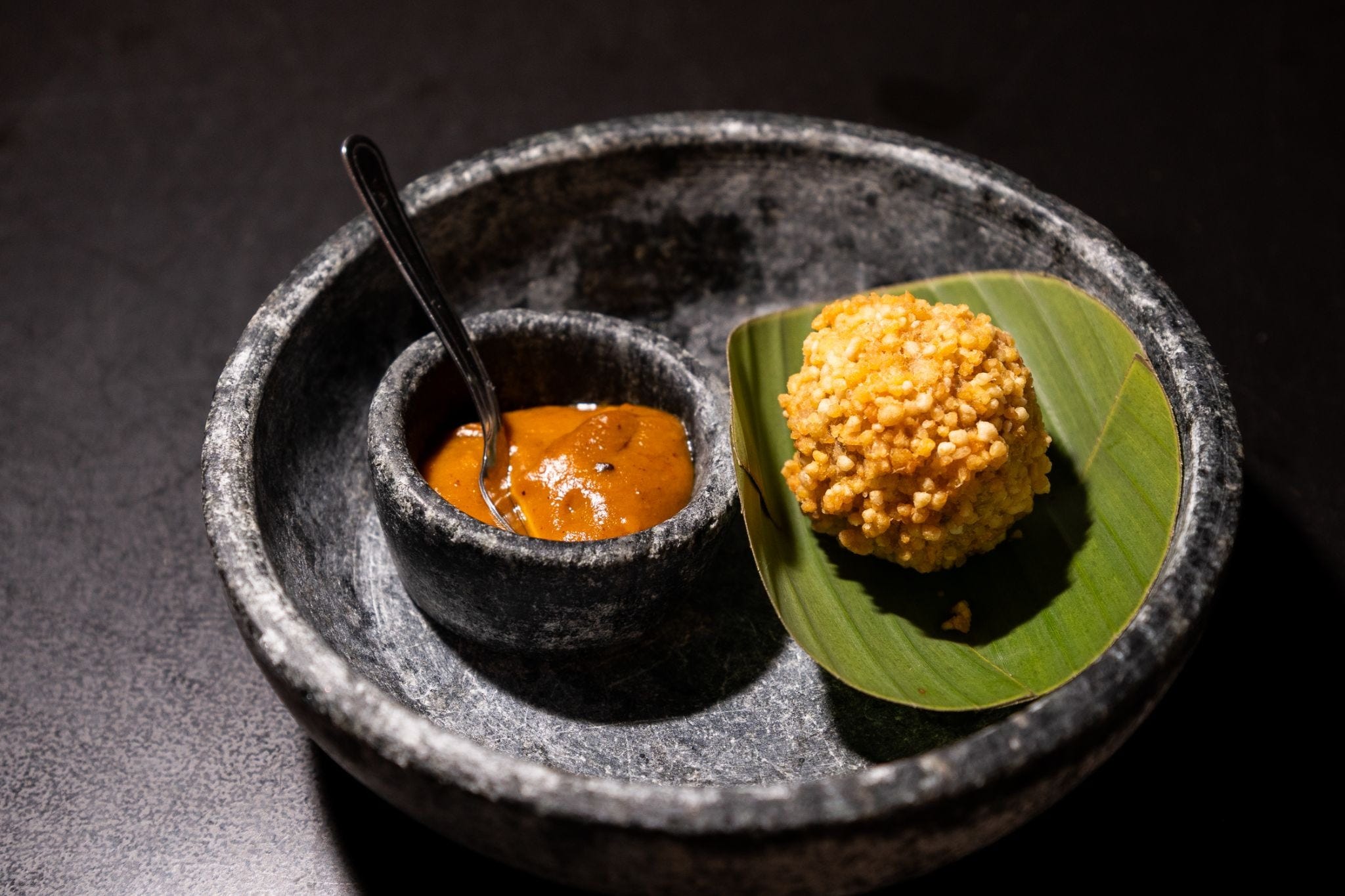
What do you think about when you think of the future of food? Is it a babaçu palm growing in northern Brazil?
Maybe not. But for a food scientist working to feed the world in more sustainable and resilient ways, this tree can spawn many questions. Can the babaçu nut help plant-based proteins improve texture? Can its byproducts become ingredients that manufacturers currently import?
And perhaps most importantly: how can native species like babaçu help diversify the global protein supply and reduce some of the environmental pressures created by today’s food system?
Building industries of the bioeconomy is becoming a global priority for countries around the world. Governments are investing in biotechnology, companies are searching for novel ingredients, and researchers are exploring biological resources that can help feed the world in more sustainable ways.
Brazil enters this race with two key advantages that make our country uniquely positioned to transform the future of food: the scale of our agriculture and our extraordinary biodiversity. As the global bioeconomy expands, countries that can transform renewable biological resources into high-value products will be at the forefront of innovation, economic development, and environmental stewardship.
Biodiversity becomes even more valuable through science
Biological richness alone does not automatically create economic value. But when biological wealth is paired with research, it can unlock enormous opportunities.
That idea inspired GFI Brazil to launch the Biomes Program in 2020. By supporting research on native species from the Amazon and Cerrado, the program explores how underutilized crops and agricultural byproducts can become ingredients for the next generation of plant-based foods.
Researchers studied species including babaçu, baru, cupuaçu, pequi, guaraná, and Brazil nut, investigating their proteins, oils, fibers, pigments, and other functional compounds. Local communities are at the helm of harvesting many of these species, which means more opportunities to generate additional value from existing production chains while encouraging sustainable use of Brazil’s biodiversity.
Over five years, the program supported 20 research projects involving 33 institutions and 25 local communities, trained graduate students, and addressed dozens of technological challenges relevant to alternative proteins.
The research underscored how innovation thrives in diverse ecosystems. Scientists, funding agencies, entrepreneurs, industry, and local communities each contribute knowledge that moves discoveries from the laboratory toward commercial application. All of these perspectives matter when you’re trying to develop a new industry from the ground up. Building connections between these key groups may be one of the program’s most important outcomes.
Building the research ecosystem
The lessons learned from the Biomes program so far are now shaping GFI Brazil’s next phase of work.
GFI Brazil is partnering with Brazil’s state research foundations to unlock substantially larger public investments in alternative protein science. Our team helps identify research priorities, design funding calls, and connect projects to the needs of the field, while public agencies provide the long-term funding infrastructure needed to expand scientific capacity.
This approach may sound familiar to our friends in the United States. American leadership in biotechnology has been built through decades of public investment by agencies such as NIH, NSF, and USDA, working alongside philanthropy and private industry. This approach is important since scientific breakthroughs need more than markets alone to grow. Breakthroughs occur more often within thriving research ecosystems that reward innovation and long-term investment.
Brazil’s path has a different starting point but follows this same principle. Our greatest strategic asset is biodiversity. Every native species represents biological characteristics that scientists are only beginning to understand. Some will never become commercial ingredients. Others may hold solutions to technical challenges that researchers around the world are trying to solve.
A new way to think about conservation


The bioeconomy also broadens the conversation about conservation. Forests, savannas, and other ecosystems are important for climate stability, biodiversity, and water access. They can also support scientific discovery and regional economic development when researchers uncover new applications for native species. Innovation and conservation become mutually reinforcing when healthy ecosystems are the foundation of sustainable supply chains.
Brazil has the scientific talent, biodiversity, and agricultural expertise to contribute meaningfully to the next generation of food technologies. In order to realize that potential, we need sustained investment in research and strong partnerships that connect discovery with practical application.
The Biomes Program is one example of what that investment can achieve. There is a deep wisdom in Brazil’s biodiversity that can be harnessed for more than ecological wealth. It is also a source of scientific knowledge, economic opportunity, and technological innovation that can strengthen the local communities who know these places and ingredients best–all while building a more resilient global food system.
A powerful pair: unparalleled biodiversity and world-class science


The Biomes Program is an example of what that investment can achieve, but it’s just one of the ways GFI Brazil works to unlock the full potential of the nation’s local plants. The potential for native species is boundless but they still need to gain popularity and develop a scalable supply chain.
Beans, on the other hand, are already popular, with an established supply chain and proven environmental and nutritional benefits. That’s why we also launched a series of targeted initiatives focused on beans, a food that has played a central role in South American food systems, culture, and agriculture for thousands of years. Brazil is one of the world’s largest producers and consumers of beans, with a wide diversity of species and varieties that offer strong nutritional profiles and high cultural acceptance.
Today, soy is the most commonly used bean in plant-based meat formulations, but there are many others—such as carioca and cowpea beans—that are well-positioned to advance the plant-based meat sector. Despite this potential, the use of beans in plant-based meat formulations remains limited, and current applications are constrained by functional, sensory, and processing challenges. We hope to change this.
As the world defines what the future of the bioeconomy can look like, Brazil has an opportunity to lead by doing what few other nations can: combining unparalleled biodiversity with world-class science. Programs like Biomes and targeted beans initiatives show how that combination can generate new ingredients, new industries, and new knowledge—creating value that begins in Brazilian ecosystems but reaches far beyond them.
To learn more about the scientists, innovations, and discoveries emerging from the Biomes Program, explore the stories behind each project on GFI Brazil’s website.
Do you find this work inspiring?
Our teams in Brazil and beyond are working hard every day to advance science and support fair regulations for alternative proteins. Without transforming how meat is made, we can’t meaningfully tackle public health problems like food insecurity, climate change, antibiotic resistance, or biodiversity loss.
This story wouldn’t be possible without the support of our amazing community of donors. As a fully philanthropy-funded nonprofit, we’re committed to keeping our resources freely available. We believe the insights that help build a more sustainable and secure food supply should be accessible to everyone, everywhere. If our work inspires you, please consider supporting GFI.
I find this fascinating. It shows how biodiversity, combined with science and sustained investment, can become sustainable proteins, and there is a double win: a more diverse food system with economic incentive based on native species. I like the bet on beans, with established supply chains and strong cultural acceptance.
I'm curious about the demand side. Are there public policy efforts in Brazil in parallel to encourage consumption of these products?