


This summer, communities in my home state of Colorado experienced extreme heatwaves, flash flooding, and wildfires all in one week. I’ve wondered lately if my summers were always this hot growing up or if there were always this many wildfires.
If you’re like me and feel like extreme weather events are more frequent, you’re not imagining it. This year, the United States experienced its hottest summer ever recorded and its most severe wildfire season in a decade. The current El Niño event also has the potential to intensify weather patterns throughout the rest of the year, with forecasts from Carbon Brief suggesting it could become the strongest in the modern observational record.
While weather has always shaped agriculture, it’s clear our food system is under particularly tremendous pressure these days. You can see this playing out on grocery store shelves and in the rising prices of everyday products. What’s not always easy to see in our daily lives is the pressure that our food system puts on our planet—especially industrial animal agriculture. The way we produce meat is a double-edged sword: it drives climate change and is also challenged by the effects of a warming climate.
This is all happening as the world’s appetite for animal protein continues to grow. With population growth factored in, animal protein production may need to increase by 50 to 70 percent to keep up with expected rising demand, according to a recent report from the Food and Agriculture Organization (FAO) and the World Meteorological Organization (WMO).
Using today’s methods, we cannot produce enough meat to meet this increasing demand while staying within safe planetary limits. Rather than expanding our extremely resource-intensive—and increasingly vulnerable—food system, we need to build a more sustainable and resilient one.
This is why GFI is laser-focused on accelerating more efficient and less resource-intensive methods of protein production—such as cultivated, plant-based, and fermentation-derived meat. Diversifying our global protein supply with these foods would pay off in two major ways: slashing the emissions that exacerbate climate change while ensuring that our food supply is more resilient to the impacts we’re already starting to experience.
Our food system is feeling the heat


The recent FAO–WMO report describes extreme heat as a “powerful risk multiplier.” It deepens drought, dries out vegetation, increases water demand, reduces worker productivity, and stresses livestock, turning individual problems into compounding issues.
These risks weigh heavily on many of the estimated 1.23 billion people worldwide who depend on agriculture for their livelihoods. As the authors of the report note, these effects also extend far beyond the farm gate, raising food prices, reducing supply, and reversing hard-won progress against world hunger.
The effects of extreme heat are having a real-time impact on our food system. The FAO–WMO assessment links rising temperatures with declining yields for maize, soybeans, wheat, and other major crops. Heat also puts agricultural workers in dangerous conditions and reduces the amount of work they can safely do.
Farmed animals bear the brunt as well. Extreme heat can reduce their feed intake, fertility, growth, and milk production. It can also weaken their immune systems and cause mass mortality. During a late-June heatwave in France, an estimated 2.5 million to 3 million broiler chickens died, according to reporting cited by GFI Europe. Across the European Union and United Kingdom, heat and drought are expected to cut 2026 grain production by 8 percent.
During periods of extreme heat, our water supply is tested, and water supplies are already dwindling in many parts of the world. The Colorado River has lost 20 percent of its flow due to a 25-year drought and chronic overuse, causing major reservoirs to fall to record-low levels. The Rhine and Po rivers in Europe are also at record-low levels. Agriculture accounts for about 70 percent of global freshwater withdrawals, so low water supplies quickly constrain food production.
The FAO–WMO report warns that rising water demand will make these losses harder to ignore. The authors explain that “even small reductions in productivity due to temperature stress will place greater pressure on the global land-base.” This could potentially drive more land conversion and emissions.
The window to avoid even greater strain is shrinking. A new UN Environment Programme report, covered by The New York Times, concludes that the world is likely to cross 1.5°C of warming within the next few years. Even under the most optimistic scenario, warming would peak around 1.8°C—and every fraction of a degree will intensify extreme weather and make adaptation harder.
We need to break this cycle. Food and agriculture account for one-third of all global emissions. Animal agriculture alone accounts for between 12 and 20 percent of those emissions. Even if we stopped burning fossil fuels tomorrow, we still wouldn’t hit our global climate goals without fixing our food system. No climate strategy on earth is viable or complete without addressing how we produce meat. Plant-based, fermentation-derived, and cultivated meat deserve a place among the world’s most ambitious and promising climate solutions.
When one risk becomes many


While extreme weather events like heatwaves, floods, and fire can often be treated as separate issues in our news cycle, they are deeply interwoven. Heat dries vegetation and makes fire seasons longer. Heat can also harden soils, making them less able to absorb water quickly, so heavy rainfall after a heatwave can lead to severe runoff, erosion, and flash floods. We’ve seen the devastating impacts of flash floods recently, from Nepal to Arizona.
Brazil also offers a sobering example of how floods can threaten a country’s food supply. In 2024, historic flooding in Rio Grande do Sul submerged fields beneath four to five meters of water in one of the country’s most important agricultural regions. As much as five million tonnes of the state’s expected 22-million-tonne soybean harvest stood to be affected, while 15 percent of its rice crop remained unharvested. Flooding inundated roads, warehouses, livestock farms, and meat-processing plants, spreading the disruption throughout the country. This prompted the Brazilian government to plan rice imports to protect domestic supplies and curb price increases.
Wildfires can create the same kind of ripple effect. They burn farms, pastures, and orchards; kill livestock; force evacuations; and damage water supplies. They also destroy forests and healthy watersheds that moderate heat, stabilize soil, store carbon, and absorb heavy rainfall. The recent FAO–WMO report finds that extreme fire events increased 120 percent from 2003 to 2023. Rising temperatures can also lengthen fire seasons, creating more opportunities for particularly destructive fires. In fact, data from Global Nature Watch shows that fires burn twice as much forest today as they did 20 years ago.
Nature-positive solutions
World Resources Institute president Ani Dasgupta recently wrote that our “best defense against natural disasters may be nature itself.” Restored forests can be managed to reduce dangerous fuel loads. Wetlands can hold floodwater. Trees and healthy soils cool landscapes and regulate water. This is all true, but protecting those systems requires sufficient land to allow them to recover. Our current and expanding use of land for animal agriculture, including growing crops as animal feed, is moving in the opposite direction—that is, we’re losing more and more forests, wetlands, grasslands, and other natural infrastructure to food production.
How we make meat today is the single biggest land-use on the planet. Under a business-as-usual scenario, agricultural land (mostly pastures and feed crops) is projected to expand by more than 600 million hectares by 2050—an area twice the size of India. Our current food system is part of a damaging feedback loop that, ironically, if left completely unmitigated, will lead to its own demise. And it will do a lot of unnecessary and irrevocable damage in the process.
Shifting toward plant-based and cultivated meat could free up three billion hectares of land for reforestation, regenerative agriculture, and more. Research also suggests that shifting one-fifth of global beef consumption to microbial proteins produced through fermentation could halve projected deforestation by 2050. Investing in smarter ways to use our agricultural land can help restore the forests and grasslands that store carbon and buffer extreme weather.
GFI at work
GFI’s policy work in 2026 has helped secure over $2.1 billion globally in public dollars to tackle the taste, price, and accessibility gaps in alternative proteins, growing the alternative protein sector and allowing nature to catch a break.
Diversifying the protein portfolio

The current protein supply depends heavily on animals, feed crops, water, land, and a highly specialized network of farms, slaughterhouses, processing plants, cold storage, and transportation. A catastrophic weather event in a major feed-producing region can affect communities far beyond it. This is a risky setup.
A more resilient system would diversify the protein portfolio. Beans, peas, lentils, soy, and other crops are direct protein sources. We can use those crops to create plant-based meat in familiar formats like nuggets, burgers, sausages, and cutlets. We can produce proteins and fats through microorganisms in controlled facilities through Biomass and precision fermentation, which are far less vulnerable to weather extremes or shocks. Cultivated meat is another production pathway as the technology reaches commercial scale.
These methods—while more sustainable and secure than how we make meat today—are not without vulnerabilities. There is no production method that is completely weather-proof. But we can build resilience by doing many smart things at once: combining production methods, building regional capacity, maintaining backup systems, and avoiding dependence on a single crop, supplier, or geography.
GFI at work
In 2026, donor support allowed GFI India and GFI APAC to demonstrate how food companies and governments could tap into the region’s indigenous crops to drive plant-based and fermentation-derived protein production.
Addressing climate pressure from our food system
Protein diversification can help on both sides of the climate equation— making our food supply more resilient to extreme weather while also reducing reliance on production methods that make those events more severe.
Beef illustrates the scale of the opportunity: cattle produce methane and require large amounts of pasture and feed, giving beef an especially large climate and land footprint. Environmental scientist and writer Emily Cassidy recently called beef “the Coal of the Food System” in an analysis for Project Drawdown, which examined the benefits of moderating beef consumption in middle- and high-income countries.
The analysis estimates that limiting beef consumption to one serving per person per week could reduce annual emissions by 2.8 billion metric tons of carbon dioxide equivalent.
But decades of evidence reaffirming beef’s outsized environmental impact have not stopped global demand from growing, and it shows no sign of slowing down. If we want to limit those impacts without depending on people to give up the foods they enjoy, we need to make those same foods in better ways.
Now, imagine if consumers had a diverse array of delicious plant-based and cultivated meat they could choose without sacrificing their favorite meals or protein intake. This is the promise of alternative proteins: consumers don’t have to choose between familiarity and sustainability.
Depending on the product and energy source, plant-based meat can be produced using up to 93 percent less land and 99 percent less water—resources that become increasingly valuable as drought, flood, fire, and rising temperatures place more pressure on food production. The scale of that opportunity grows quickly.
At 11 percent of the global protein market, alternative proteins could deliver climate benefits comparable to grounding nearly every airplane in the world, lowering the emissions that make extreme weather events more intense. Alternative proteins also lower the demand for land, giving our forests, wetlands, and grasslands more room to recover.
In other words: protein diversification can give our planet the room it needs to breathe and heal. Just imagine what that could look like.
We can imagine more for our land
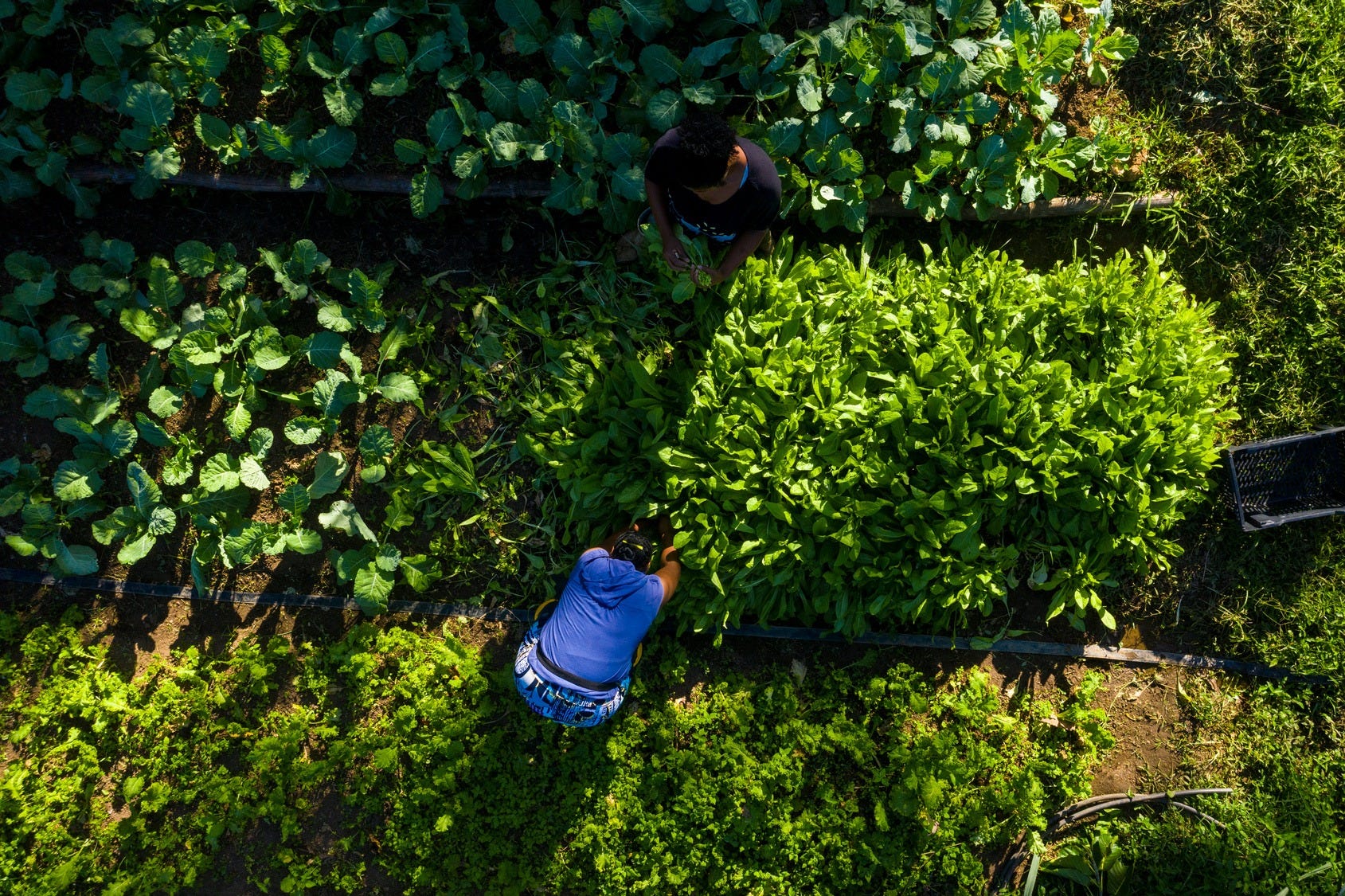
One of the clearest realities of our current food system is that we ask an extraordinary amount from land used for raising and feeding farmed animals. Vast agricultural acreage exists primarily to grow feed for livestock. If humans had the chance to start a whole new food system from scratch, this level of inefficiency would never make the cut. Left unchanged as our default practice, this same level of inefficiency leaves our food supply even more vulnerable to heat, drought, wildfires, and other major weather events.
What excites me about protein diversification is the opportunity to rethink our current equation entirely. Over the past decade, we’ve already seen major advances in plant protein optimization, ingredient processing, and crop functionality. Researchers can now breed crops to enhance sensory performance and nutritional efficiency. Governments are showing interest by investing in local protein-crop infrastructure, and companies are building full processing facilities for popular alternative protein crops like peas, oats, legumes, duckweed, fungi, and fermentation feedstocks.
As these systems mature, we can use our cropland to produce more direct human nutrition per acre. Farmers can tailor their crops to regional climates and resilient supply chains. Agricultural byproducts can find a second home as high-value fermentation ingredients, creating new revenue streams for farmers who need it. Rural communities can thrive as high-value biomanufacturing economies connected directly to their local agriculture. That matters because resilient food systems cannot be built without thriving rural communities around the world. These same communities are also among those most at risk from our inaction.
What would it look like if we treated our agricultural land like the force multiplier it could be—producing food while supporting soil restoration, water conservation, and climate resilience? Agricultural lands don’t have to remain limited by twentieth-century agricultural logic. If we innovate wisely, our ag lands can work smarter, feed more people directly, and create new economic opportunities for farming communities around the world.
Investing in alternative proteins won’t stop extreme weather events from happening, but it will make us more resilient and prepared when they do.
What it takes to build a more resilient food system
Protein diversification will not happen on its own. We need public investment in open-access research, crop development, ingredient processing, and manufacturing infrastructure. Farmers cannot shoulder the risks of transition into new markets alone. We need fair, science-backed legislation that clearly paves the way for producers to bring new products to market. Food must also meet consumer demand for taste, price, nutrition, and convenience.
GFI was founded to change the script on how we produce meat. As a nonprofit, we don’t bet on one company or one technology. We focus on building the conditions for many solutions to flourish—advancing science, fighting for fair regulation, and equipping researchers and entrepreneurs with shared tools. Because donors shared our vision and backed these ideas, the world looks different now than when we started this work 10 years ago. But we still have more work to do.
The next decade will decide whether alternative proteins reach enough plates to give our food system the resilience it needs. If you want to be part of a global community actively steering us toward that future, please consider supporting GFI.